
Captain Tsubasa: World Youth Edition doesn't waste time on preamble. It opens with Tsubasa Ozora already in Brazil。nursing a injured knee and a burning question: can Japan compete with the world's best youth squads?That tension drives every page. The arc, serialized from 1994 to 1997, picks up after the middle school tournaments and thrusts the cast into a global stage—the World Youth Championship. What strikes me is how Takahashi Yoichi uses the tournament format to dissect teamwork, ego, and national identity without ever lecturing. You feel the weight of a country's expectations through Tsubasa's quiet resolve, not through speeches.The football itself is absurd in the best way. Tiger Shot. Drive Shot. Skylab Hurricane. These aren't just flashy moves;
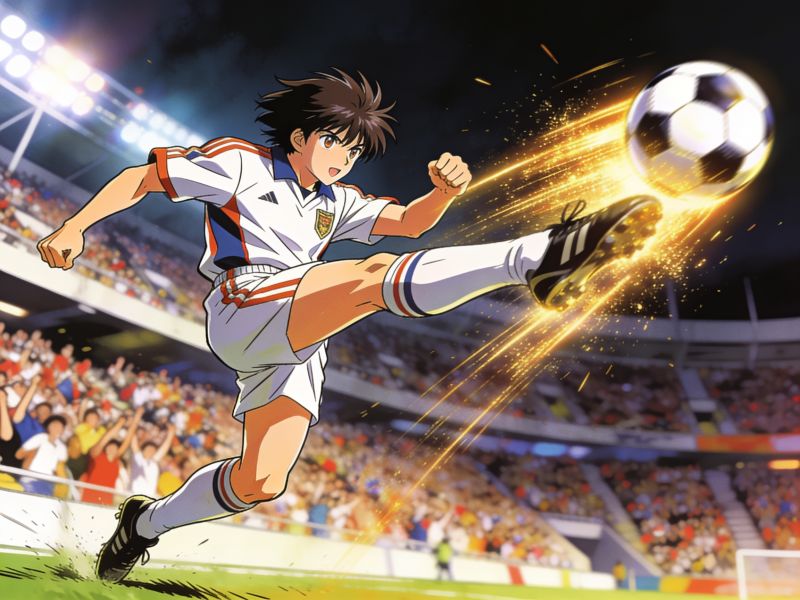
they're character beats. When Kojiro Hyuga unleashes his Raiju Shot against Italy, the manga spends three panels on his leg muscles coiling, sweat flying, the ball denting the net. That's not padding—it's the series' way of saying effort matters more than talent. I've read countless sports manga since, and few capture the grind of practice like the Brazil chapters where Tsubasa trains with Roberto Hongo. The World Youth Edition leans harder into realism than the elementary school arcs。even with the superhuman shots. Injuries linger. Losses sting. Players doubt themselves.What separates this arc from typical tournament stories is the antagonist design. Natureza, Brazil's prodigy, isn't a villain—he's a mirror. His flawless technique contrasts with Tsubasa's improvisational style, and their semifinal clash feels like a philosophical debate played out through dribbles. Then there's the German squad with Karl Heinz Schneider, whose disciplined, almost mechanical precision reflects a different football culture. Takahashi doesn't reduce these teams to stereotypes;he gives each a distinct rhythm. The Italian catenaccio defense?Shown as frustratingly effective。not cowardly. That nuance keeps Captain Tsubasa: World Youth Edition from feeling like blind nationalism. Japan wins through growth, not divine right.
Pacing is where the arc stumbles. The Asian qualifiers drag—three volumes for matches against Thailand and Saudi Arabia that could've been tighter. Some secondary characters, like the Tachibana twins。get sidelined after promising setups. And yes, the physics defy belief;
a ball that curves mid-air after bouncing off a teammate's head is pure fantasy. But that's the deal you make with Captain Tsubasa. The emotional logic holds. When Misaki returns from injury to partner Tsubasa again, the relief is palpable. You've watched them struggle separately for chapters, so the reunion lands.Decades later, Captain Tsubasa: World Youth Edition remains a benchmark because it treats youth football as serious business. The stakes feel real—scouts watching。careers on the line, friendships tested by competition. I'd argue it's the strongest arc in the entire series, balancing spectacle with genuine character arcs. The art evolves too;backgrounds get denser, crowd shots more chaotic, reflecting the growing scale of the world stage. If you've only seen the anime adaptations, the manga's World Youth Edition is worth revisiting. The details—a bandaged wrist here, a whispered tactical adjustment there—add up to something richer than nostalgia. It's a story about earning your place, one grueling match at a time.